Hello Everyone,
While listening to the Fisheries Museum of the Atlantic’s Maud R.M., complete with the put-put-put of an authentic make-and-break engine, I’m reminded that our shoreline waterways were once the main highway for coastal residents.
Whether people travelled by sail power or were propelled by oars or eventually by marine engines, the little boats of the coast linked island dwellers with the mainland. Trips to shore were carefully planned, incorporating trips to stores, visits with friends and relatives and rare appointments with doctors.
When make-and-break engines were first developed, at the turn of the 20th century, they gave an element of security to isolated communities. People were no longer dependent upon the weather; if it was "flat calm" they were still able to get to shore. More importantly, unless there was a vicious storm, they were able to go to shore to get doctors and members of the clergy, if there was an emergency at home.
The simple mechanics of the first marine engines made them user-friendly for those who had no previous experience with machinery.
The make and break experience is still available, for those who visit the Fisheries Museum of the Atlantic, in Lunenburg, Nova Scotia. The inshore boat replica, Maud R. M., putters around Lunenburg harbour at least once a week - and several lucky visitors to the Museum are able to take part in the tour!
Wishing you Smooth Sailing,
Heather
Showing posts with label Nova Scotia. Show all posts
Showing posts with label Nova Scotia. Show all posts
Monday, August 18, 2008


Monday, July 28, 2008
Ship to Shore ...
Hello Everyone,
This morning, Lunenburg’s front harbour is like a pond of burnished silver, reflecting the colours of the sky, paused with an pregnant hush. Will it rain? Will it clear? We don’t know.
It is an easy thing to stand on land and look out to the ocean, wondering what the weather conditions might bring. It is an entirely different matter to be on the ocean, especially aboard a fishing vessel, and be at the mercy of the whims of nature.
Now-a-days, with computers and a multitude of ship-to-shore communications, sudden storms rarely arrive without some form of advance warning. Mariners no longer have to base their survival on the rhyming ditties of old, including:
Red sky in the morning,
Sailors take warning.
Red sky at night,
Sailor’s delight.
Sadly, the change in communication has taken place only within the span of a lifetime. The turning point for Nova Scotian schooners came with the August Gales of 1926 and 1927. Although the technology had been available before that date, fishing schooners were not equipped with receivers until after the horrific loss of life in the Gales.
Although the hurricanes hit along the shore and caused wide-spread destruction, the Lunenburg fleet was hit particularly hard. In those two years, 138 fishermen aboard six Lunenburg schooners were lost. One of the keenest felt aspects of the tragedy is that those on land knew of the approaching storms, based on weather reports. The men aboard the schooners had no such luxury and unwittingly faced a dark future.
After the 1927 Gale, the Province of Nova Scotia made arrangements to have weather signals sent via radio, from Cape Breton. The owners of the schooners were instructed to install radio receivers aboard their vessels. Those two simple acts, previously avoided because of the expense, undoubtedly saved countless lives.
Wishing you Smooth Sailing,
Heather
This morning, Lunenburg’s front harbour is like a pond of burnished silver, reflecting the colours of the sky, paused with an pregnant hush. Will it rain? Will it clear? We don’t know.
It is an easy thing to stand on land and look out to the ocean, wondering what the weather conditions might bring. It is an entirely different matter to be on the ocean, especially aboard a fishing vessel, and be at the mercy of the whims of nature.
Now-a-days, with computers and a multitude of ship-to-shore communications, sudden storms rarely arrive without some form of advance warning. Mariners no longer have to base their survival on the rhyming ditties of old, including:
Red sky in the morning,
Sailors take warning.
Red sky at night,
Sailor’s delight.
Sadly, the change in communication has taken place only within the span of a lifetime. The turning point for Nova Scotian schooners came with the August Gales of 1926 and 1927. Although the technology had been available before that date, fishing schooners were not equipped with receivers until after the horrific loss of life in the Gales.
Although the hurricanes hit along the shore and caused wide-spread destruction, the Lunenburg fleet was hit particularly hard. In those two years, 138 fishermen aboard six Lunenburg schooners were lost. One of the keenest felt aspects of the tragedy is that those on land knew of the approaching storms, based on weather reports. The men aboard the schooners had no such luxury and unwittingly faced a dark future.
After the 1927 Gale, the Province of Nova Scotia made arrangements to have weather signals sent via radio, from Cape Breton. The owners of the schooners were instructed to install radio receivers aboard their vessels. Those two simple acts, previously avoided because of the expense, undoubtedly saved countless lives.
Wishing you Smooth Sailing,
Heather
Thursday, March 20, 2008
Upcoming Season at Fisheries Museum
No matter what the season, one of the most delightful ways to spend a few hours, or an entire day, is a visit to Lunenburg’s Fisheries Museum of the Atlantic. Several major exhibits are open year-round, Monday - Friday (holidays excepted). In the winter and early spring, Wednesday mornings are Movie Mornings, with showings from the Museum’s heritage collection, at 10:00 a.m.
Full season programming begins on May 17, with visitors encouraged to explore many aspects of Nova Scotia’s maritime heritage. Exciting activities and a wonderful salt and fresh water aquarium engage people of all ages. Exhibit topics include rum running, losses at sea, the famous Bluenose and the history of fishing on the Banks.
2008 marks the 70th anniversary of the launch of Canada’s oldest saltbank schooner, Theresa E. Connor. The flagship of the Fisheries Museum of the Atlantic, Theresa E. Connor is a tribute to all schooners that plied their trade on the Banks. Stepping aboard the vessel is like going back in time, where you can see a schooner ready for work and talk with men who fished on the Banks.
Cape Sable, a steel-hulled side trawler, is also open to the public, with retired fishermen sharing stories of their times at sea.
Local maritime heritage is celebrated in many ways, at the Museum. Special events are scheduled throughout the season, but every day is a special day, with thrilling discoveries and activities. Visitors enjoy the ultimate waterfront experience, at the Fisheries Museum of the Atlantic.
Full season programming begins on May 17, with visitors encouraged to explore many aspects of Nova Scotia’s maritime heritage. Exciting activities and a wonderful salt and fresh water aquarium engage people of all ages. Exhibit topics include rum running, losses at sea, the famous Bluenose and the history of fishing on the Banks.
2008 marks the 70th anniversary of the launch of Canada’s oldest saltbank schooner, Theresa E. Connor. The flagship of the Fisheries Museum of the Atlantic, Theresa E. Connor is a tribute to all schooners that plied their trade on the Banks. Stepping aboard the vessel is like going back in time, where you can see a schooner ready for work and talk with men who fished on the Banks.
Cape Sable, a steel-hulled side trawler, is also open to the public, with retired fishermen sharing stories of their times at sea.
Local maritime heritage is celebrated in many ways, at the Museum. Special events are scheduled throughout the season, but every day is a special day, with thrilling discoveries and activities. Visitors enjoy the ultimate waterfront experience, at the Fisheries Museum of the Atlantic.
Wednesday, March 5, 2008
The Courage To Do The Impossible ...
Marlon Brando in "Mutiny on the Bounty". Russell Crowe in "Master and Commander". Captain Angus Walters aboard the famous Bluenose.
What do these three men have in common? The connection is found through their vessels; the replicas of the HMS Bounty and the HMS Rose (later HMS Surprise) and the original Bluenose were all built at the Smith and Rhuland Shipyard, in Lunenburg Nova Scotia.
The replica of HMS Bounty was launched in 1960, to the cheers of thousands of Lunenburgers and visitors to the community. It sparked the movement to build a replica of our own Bluenose, and in 1963, Bluenose II slid down the ways at the Smith and Rhuland Shipyard.
In 1970, the replica of HMS Rose was constructed at the same Yard. Marine history buffs were delighted to see another part of nautical history come to life under the skilled hands of Lunenburg craftsmen. In 2003, HMS Rose was immortalized in the release of "Master and Commander", as the vessel HMS Surprise. In honour of that role, the name of the ship was officially changed to HMS Surprise.
The Smith and Rhuland Shipyard was one of the best-known shipyards in Nova Scotia. Located on the Lunenburg waterfront, the Yard produced more than one hundred fine ships. The Shipyard was the creation of Richard Smith and George Rhuland and was established in 1900. In their first year, they built two vessels: Palatia and Quisetta.
From 1900 until the mid-1970s, many vessel designs went from half-models to full-sized craft. Fishing vessels, like the Fisheries Museum of the Atlantic’s Theresa E. Connor were built there, as were larger "ocean-going" ships. Vessels that were used for pleasure craft and in serious work went hand-in-glove with other, adventurous ships ~ like rum runners!
The mainstay of the Smith and Rhuland Shipyard, though, remained in the fishery. The fine vessels, the shipwrights that crafted them and the men who sailed them can all be brought together under the same tagline used in the movie "Master and Commander": The Courage To Do The Impossible Lies in the Hearts of Men.
For every fisherman who has gone to sea and for their brave families on shore, the Fisheries Museum of the Atlantic celebrates their dreams and honours their sacrifices.
Wishing you Smooth Sailing,
Heather
What do these three men have in common? The connection is found through their vessels; the replicas of the HMS Bounty and the HMS Rose (later HMS Surprise) and the original Bluenose were all built at the Smith and Rhuland Shipyard, in Lunenburg Nova Scotia.
The replica of HMS Bounty was launched in 1960, to the cheers of thousands of Lunenburgers and visitors to the community. It sparked the movement to build a replica of our own Bluenose, and in 1963, Bluenose II slid down the ways at the Smith and Rhuland Shipyard.
In 1970, the replica of HMS Rose was constructed at the same Yard. Marine history buffs were delighted to see another part of nautical history come to life under the skilled hands of Lunenburg craftsmen. In 2003, HMS Rose was immortalized in the release of "Master and Commander", as the vessel HMS Surprise. In honour of that role, the name of the ship was officially changed to HMS Surprise.
The Smith and Rhuland Shipyard was one of the best-known shipyards in Nova Scotia. Located on the Lunenburg waterfront, the Yard produced more than one hundred fine ships. The Shipyard was the creation of Richard Smith and George Rhuland and was established in 1900. In their first year, they built two vessels: Palatia and Quisetta.
From 1900 until the mid-1970s, many vessel designs went from half-models to full-sized craft. Fishing vessels, like the Fisheries Museum of the Atlantic’s Theresa E. Connor were built there, as were larger "ocean-going" ships. Vessels that were used for pleasure craft and in serious work went hand-in-glove with other, adventurous ships ~ like rum runners!
The mainstay of the Smith and Rhuland Shipyard, though, remained in the fishery. The fine vessels, the shipwrights that crafted them and the men who sailed them can all be brought together under the same tagline used in the movie "Master and Commander": The Courage To Do The Impossible Lies in the Hearts of Men.
For every fisherman who has gone to sea and for their brave families on shore, the Fisheries Museum of the Atlantic celebrates their dreams and honours their sacrifices.
Wishing you Smooth Sailing,
Heather
Friday, February 8, 2008
March Break Ahead!

Hello Everyone,
Glimpses of sunshine and a renewed freshness in the air give hope of springtime, even when we are going from pillar to post between snowstorms.
The Fisheries Museum of the Atlantic, in Lunenburg, Nova Scotia, is making plans to celebrate during next month’s spring break for school students. The March Break takes place between March 10 - 14, in Nova Scotia.
Special events will be held each day, at the Museum. Highlights include building your very own Styrofoam tugboat with the help of the South Shore Ship Modeller’s Guild. This enthusiastic group of volunteers will be at the Museum on Friday, March 14, with the programme running at 10 a.m. and 2 p.m.
Other activities will include films, crafts and stories. Our aquarium, as well as other exhibits, will be open to the public, ensuring that there is something fun for everyone!
Please check our website, http://fisheries.museum.gov.ns.ca for updates for the March Break Special Events. Pre-booking for registration will ensure that you have a space. Registration can be done by email, smithls@gov.ns.ca or by calling the Museum at 902-634-4794.
Wishing you Smooth Sailing,
Heather
Wednesday, January 30, 2008
Fisheries Museum of the Atlantic in Lunenburg, Nova Scotia

Hello Everyone,
When you visit Lunenburg and the Fisheries Museum of the Atlantic, you can be assured of an experience that focuses on excellence and authenticity.
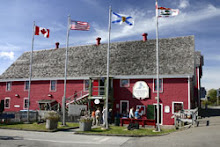
Our streetscapes are filled with structures that are proudly maintained and painted in almost every colour of the rainbow. "Red" is the colour of choice along the waterfront and the Museum buildings are gleaming examples of that selection. The bright buildings beckon with the promise of activity, fun and a look into the seafaring history of Atlantic Canada.
The Fisheries Museum of the Atlantic sits on the edge of the waterfront, complete with the vessels Theresa E. Connor and Cape Sable. During the summer we have full programming, which includes excursions in the harbour with one of our smaller vessels, the Maud R.M. The sounds of the make-and-break engine aboard the Maud R.M. fill the air, taking us back to the turn of the 20th century. In those days, the put-put-put sound was familiar all along the coast, when the water ways were the highways for those who lived next to the ocean.
Whether you come by land or by sea, we look forward to sharing our stories and experiences with you.
Wishing you Smooth Sailing,
Heather
Tuesday, January 29, 2008
Looking into the Past
Hello Everyone,
Lunenburg is lovely in all seasons. This morning, the beauty of the harbour and the skyline was breathtaking. Overlapping strokes of lavender and blue nestled together, painting a picture that renewed spirits in this last week of January!
It made me wonder how many eyes have looked to the mouth of the harbour, and the many scenes that were observed over the years.
The old time schooner fishery of Atlantic Canada saw schooners that were away from their home ports for months at a time. Families had a vague sense of when their loved ones would return, but it was far from an exact science. The summer trip, which was the longest, easily stretched from June to September. Vessels could return to port in the first days of September, or circumstances might keep them away until October.
There was no method of direct communication from ship to shore. Letters could be sent back and forth, but that was only from one vessel to another, if one of the schooners was headed to port. If the fishermen had to stay at sea to get more fish in their holds, they often stayed.
The uncertainty at home was keenly felt. The delay could mean one of two things: the vessels could be engaged in fishing, or they might have been caught in a storm or cut down by a steamer.
When schooners rounded Battery Point and entered Lunenburg’s front harbour, the sigh of relief would have been palpable. The only added hesitancy would have come if a schooner had their flags at half-mast. This would indicate that the vessel had lost one or more of its crew.
Many eyes have been drawn to the Lunenburg harbour, for many reasons. It is ever changing in its beauty and is a picture that is worth more than just a thousand words!
If you have an opportunity to visit the Fisheries Museum of the Atlantic, you’ll be captivated by the exhibits and the people. It’s a true showcase of Atlantic Canada’s heritage. Come to see the waterfront for yourself!
Wishing you Smooth Sailing,
Heather
Lunenburg is lovely in all seasons. This morning, the beauty of the harbour and the skyline was breathtaking. Overlapping strokes of lavender and blue nestled together, painting a picture that renewed spirits in this last week of January!
It made me wonder how many eyes have looked to the mouth of the harbour, and the many scenes that were observed over the years.
The old time schooner fishery of Atlantic Canada saw schooners that were away from their home ports for months at a time. Families had a vague sense of when their loved ones would return, but it was far from an exact science. The summer trip, which was the longest, easily stretched from June to September. Vessels could return to port in the first days of September, or circumstances might keep them away until October.
There was no method of direct communication from ship to shore. Letters could be sent back and forth, but that was only from one vessel to another, if one of the schooners was headed to port. If the fishermen had to stay at sea to get more fish in their holds, they often stayed.
The uncertainty at home was keenly felt. The delay could mean one of two things: the vessels could be engaged in fishing, or they might have been caught in a storm or cut down by a steamer.
When schooners rounded Battery Point and entered Lunenburg’s front harbour, the sigh of relief would have been palpable. The only added hesitancy would have come if a schooner had their flags at half-mast. This would indicate that the vessel had lost one or more of its crew.
Many eyes have been drawn to the Lunenburg harbour, for many reasons. It is ever changing in its beauty and is a picture that is worth more than just a thousand words!
If you have an opportunity to visit the Fisheries Museum of the Atlantic, you’ll be captivated by the exhibits and the people. It’s a true showcase of Atlantic Canada’s heritage. Come to see the waterfront for yourself!
Wishing you Smooth Sailing,
Heather
Monday, January 21, 2008
Old Town Lunenburg
Hello Everyone,
We talk about the Fisheries Museum of the Atlantic, here in Lunenburg Nova Scotia, but we haven’t really said very much yet about the town of Lunenburg.
The community was founded in 1753. The first Lunenburgers were called Foreign Protestants by the British, who brought us here to settle the land.
Most of us spoke only German; we were from the same areas as those who became known as the Pennsylvania Dutch. In fact, it was because the Pennsylvania Dutch were such good settlers that caused the British to advertise for more of them, approximately twenty years later!
If those first Lunenburgers could return today, there would be aspects of the community that would be familiar to them. Lunenburg is the only colonial settlement to have retained the grid pattern that was used by British military planners, when creating a new town or city. The architecture, mostly of wood, reflects the entire evolution of the town; there are buildings from the 1700s right through to the present time.
In 1995, UNESCO designated Old Town Lunenburg as a World Heritage Site. If you check the UNESCO link on this page, it will take you to more detailed information about the designation.
Most of all, though, Lunenburg is a vibrant, living community at the edge of the sea. We’re not trapped in a bell jar; time has not stood still in Lunenburg, although the chapters of our history have been carefully noted and preserved.
Lunenburg captures the essence of seafaring Atlantic Canada. Beauty, charm, industries and celebrations are in full abundance. The Fisheries Museum of the Atlantic is located on the historic waterfront, in Old Town Lunenburg.
Wishing you Smooth Sailing,
Heather
We talk about the Fisheries Museum of the Atlantic, here in Lunenburg Nova Scotia, but we haven’t really said very much yet about the town of Lunenburg.
The community was founded in 1753. The first Lunenburgers were called Foreign Protestants by the British, who brought us here to settle the land.
Most of us spoke only German; we were from the same areas as those who became known as the Pennsylvania Dutch. In fact, it was because the Pennsylvania Dutch were such good settlers that caused the British to advertise for more of them, approximately twenty years later!
If those first Lunenburgers could return today, there would be aspects of the community that would be familiar to them. Lunenburg is the only colonial settlement to have retained the grid pattern that was used by British military planners, when creating a new town or city. The architecture, mostly of wood, reflects the entire evolution of the town; there are buildings from the 1700s right through to the present time.
In 1995, UNESCO designated Old Town Lunenburg as a World Heritage Site. If you check the UNESCO link on this page, it will take you to more detailed information about the designation.
Most of all, though, Lunenburg is a vibrant, living community at the edge of the sea. We’re not trapped in a bell jar; time has not stood still in Lunenburg, although the chapters of our history have been carefully noted and preserved.
Lunenburg captures the essence of seafaring Atlantic Canada. Beauty, charm, industries and celebrations are in full abundance. The Fisheries Museum of the Atlantic is located on the historic waterfront, in Old Town Lunenburg.
Wishing you Smooth Sailing,
Heather
Thursday, January 17, 2008
Knock three times
Hello Everyone,
No, the title isn't meant to be read as lines from an old song.
If anyone from Lunenburg and the surrounding area hears three knocks and there is no apparent source, it means only one thing: we've heard a forerunner.
Forerunners are never meant to be nasty or evil. They are warnings that someone we know, most often someone related to us, will die within three days of hearing the knocks. It's generally felt that this is to give us time to brace ourselves for the news of the loss.
There are stories of those who have been lost at sea who have come, in almost a ghostly apparition, to announce the news themselves. In many of these stories, the news of the loss of the fisherman is not confirmed for weeks. When the confirmation is received, it is revealed that the loss took place at almost the exact same time as the "forerunner".
While we don't pretend to know everything, there have been countless stories of forerunners in Lunenburg County, for many generations. Many of these stories conclude with confirmation of the passing of a loved one.
As Shakespeare once wrote, "There are more things in heaven and earth, Horatio, Than are dreamt of in your philosophy."
Wishing you Smooth Sailing,
Heather
No, the title isn't meant to be read as lines from an old song.
If anyone from Lunenburg and the surrounding area hears three knocks and there is no apparent source, it means only one thing: we've heard a forerunner.
Forerunners are never meant to be nasty or evil. They are warnings that someone we know, most often someone related to us, will die within three days of hearing the knocks. It's generally felt that this is to give us time to brace ourselves for the news of the loss.
There are stories of those who have been lost at sea who have come, in almost a ghostly apparition, to announce the news themselves. In many of these stories, the news of the loss of the fisherman is not confirmed for weeks. When the confirmation is received, it is revealed that the loss took place at almost the exact same time as the "forerunner".
While we don't pretend to know everything, there have been countless stories of forerunners in Lunenburg County, for many generations. Many of these stories conclude with confirmation of the passing of a loved one.
As Shakespeare once wrote, "There are more things in heaven and earth, Horatio, Than are dreamt of in your philosophy."
Wishing you Smooth Sailing,
Heather
Wednesday, January 16, 2008
Lunenburg "hung on a fish hook"
Hello Everyone,
There’s an old saying that Lunenburg "hung on a fish hook". It means that the future and good fortune of the town relied completely on the success of the fisheries.
For most of our 255 year history, this has been accurate. The first generation of Lunenburgers consisted mostly of farmers. By the time of the second generation, we were well established as a place for shipbuilding and for fishing.
Like many coastal communities in Atlantic Canada, we starting fishing close to shore, then moved out towards the various fishing banks of the North Atlantic.
Canada’s oldest saltbank schooner, Theresa E. Connor, is the flagship of the Fisheries Museum of the Atlantic. Launched in December 1938, the schooner was born into a time of danger on the Banks. The Theresa E. Connor did not start fishing until the first months of 1939; in less than a year, the world was at war, again.
Fishing schooners were in danger from enemy U-boats as well as from convoys and large shipping vessels. Torpedoed and cut down, men and vessels were lost at sea.
Theresa E. Connor survived the war years. Equipped with an engine, as well as sails, the men fished from little dories and salted their catch in the hold of the vessel. Eventually the Theresa E. Connor went fresh fishing, as well. This meant that the men still fished from the dories, but the fishing trips were shorter, as the catch was put on ice in the hold. Since the fish were not salted, they were "fresh".
The spirit of adventure has not dimmed along the Atlantic coast. A visit to the Fisheries Museum of the Atlantic guarantees memories of the best of Nova Scotia!
Wishing you Smooth Sailing,
Heather
There’s an old saying that Lunenburg "hung on a fish hook". It means that the future and good fortune of the town relied completely on the success of the fisheries.
For most of our 255 year history, this has been accurate. The first generation of Lunenburgers consisted mostly of farmers. By the time of the second generation, we were well established as a place for shipbuilding and for fishing.
Like many coastal communities in Atlantic Canada, we starting fishing close to shore, then moved out towards the various fishing banks of the North Atlantic.
Canada’s oldest saltbank schooner, Theresa E. Connor, is the flagship of the Fisheries Museum of the Atlantic. Launched in December 1938, the schooner was born into a time of danger on the Banks. The Theresa E. Connor did not start fishing until the first months of 1939; in less than a year, the world was at war, again.
Fishing schooners were in danger from enemy U-boats as well as from convoys and large shipping vessels. Torpedoed and cut down, men and vessels were lost at sea.
Theresa E. Connor survived the war years. Equipped with an engine, as well as sails, the men fished from little dories and salted their catch in the hold of the vessel. Eventually the Theresa E. Connor went fresh fishing, as well. This meant that the men still fished from the dories, but the fishing trips were shorter, as the catch was put on ice in the hold. Since the fish were not salted, they were "fresh".
The spirit of adventure has not dimmed along the Atlantic coast. A visit to the Fisheries Museum of the Atlantic guarantees memories of the best of Nova Scotia!
Wishing you Smooth Sailing,
Heather
Tuesday, January 15, 2008
Where Down is Never Up
Hello Everyone,
Planning a visit to Lunenburg, Nova Scotia? You’ll find that the folks are generally very friendly, the food is incredible, the tours of the town are fun and the museums are fabulous. We’re also one of Atlantic Canada’s leading cultural communities, with 19 art galleries. Old Town Lunenburg maintains its charm as a UNESCO World Heritage Site. This all takes place within a community of 2,300 people!
Superstitions have had a way of creeping into the lives of Lunenburgers for as long as memory can recall. Although some of the habits seem comical, it’s important to realize that the superstitions originated as a way for people to feel that they had control over uncontrollable aspects of their lives. In the age of sail, when loved ones were away from home for months at a time, families would do anything that they could, to protect those who were on the North Atlantic.
In my childhood, I watched my mother carefully follow the same ritual, each time she baked bread. The hot loaves would be carefully tipped, partly to one side, and eased out of their pans. They were then put upright, on cooling racks.
This didn’t seem odd to me. It was only after I began working at the Fisheries Museum of the Atlantic that I discovered that it is an age-old tradition. Whenever there were friends or family at sea, the women would never turn a pan upside down ... nor would they turn a loaf of bread upside down. The fear was that if they did, the schooner on which their loved ones were sailing would be caught in a storm and would capsize.
As I said, this was a way of dealing with daily fears. A strong belief in the superstitions gave a sense of control in lives that were forever fraught with uncontrollable elements of nature.
Wishing you Smooth Sailing,
Heather
Planning a visit to Lunenburg, Nova Scotia? You’ll find that the folks are generally very friendly, the food is incredible, the tours of the town are fun and the museums are fabulous. We’re also one of Atlantic Canada’s leading cultural communities, with 19 art galleries. Old Town Lunenburg maintains its charm as a UNESCO World Heritage Site. This all takes place within a community of 2,300 people!
Superstitions have had a way of creeping into the lives of Lunenburgers for as long as memory can recall. Although some of the habits seem comical, it’s important to realize that the superstitions originated as a way for people to feel that they had control over uncontrollable aspects of their lives. In the age of sail, when loved ones were away from home for months at a time, families would do anything that they could, to protect those who were on the North Atlantic.
In my childhood, I watched my mother carefully follow the same ritual, each time she baked bread. The hot loaves would be carefully tipped, partly to one side, and eased out of their pans. They were then put upright, on cooling racks.
This didn’t seem odd to me. It was only after I began working at the Fisheries Museum of the Atlantic that I discovered that it is an age-old tradition. Whenever there were friends or family at sea, the women would never turn a pan upside down ... nor would they turn a loaf of bread upside down. The fear was that if they did, the schooner on which their loved ones were sailing would be caught in a storm and would capsize.
As I said, this was a way of dealing with daily fears. A strong belief in the superstitions gave a sense of control in lives that were forever fraught with uncontrollable elements of nature.
Wishing you Smooth Sailing,
Heather
Monday, January 14, 2008
Threescore and Ten!

Hello Everyone,
2008 is a special year at the Museum. The last of Canada’s saltbank schooners, Theresa E. Connor, is 70 years old this year!
The Museum had its start aboard the schooner, in 1967; since then we’ve grown to occupy a set of buildings that once housed a huge fish processing plant, a carpenter shop, boat building shop and an ice house. Theresa E. Connor is now joined at wharf side by the trawler Cape Sable, giving a well-rounded view of fishing on the banks of the North Atlantic.
One of the great things about the history of the fishery, on the Atlantic coast of Canada, is that it led to a migration of fishermen and their families. Many Nova Scotians went to the Eastern Seaboard of the United States, establishing a strong link between those left at home with their cousins in the "Boston States". Many fishing families from Newfoundland came to Nova Scotia; their vim and vigour injected a strong burst of energy in the workforce of places like Lunenburg.
We’d love to connect with families who have roots connected to Lunenburg, Nova Scotia. Do you have a connection to our schooner, Theresa E. Connor? The vessel fished from early 1939 until the 1960s.
A saltbank schooner is one that preserved its’ catch by salting it, rather than keeping it on ice. The method of preserving fish in salt is one that dates back thousands of years. When technology developed to the point that there was a steady supply of ice available for the fishing fleets of the North Atlantic, "salt" fishing gave way to "fresh" fishing ~ fish were kept fresh, on ice, and the vessels returned home within weeks, rather than months.
Wishing you smooth sailing,
Heather
Heather
Subscribe to:
Posts (Atom)